




AI product recommendation engines are transforming e-commerce by delivering personalized shopping experiences that increase conversion rates by up to 300%. This comprehensive guide explores how modern recommendation systems leverage machine learning algorithms, collaborative filtering, and real-time behavioral data to predict customer preferences with remarkable accuracy.
TL;DR Summary
- AI recommendation engines use machine learning, collaborative filtering, and content-based algorithms to predict customer preferences and increase conversion rates by 15-300%.
- Leading platforms in 2026 include Dynamic Yield, Nosto, Bloomreach, Algolia Recommend, and Clerk.io, each offering unique strengths for different business sizes and industries.
- Successful implementation requires quality data collection, hybrid algorithm approaches, continuous A/B testing, and careful balance between personalization and privacy compliance.
What is an AI Product Recommendation Engine?
An AI Product Recommendation Engines is a sophisticated software system that analyzes customer data, browsing behavior, purchase history, and contextual signals to automatically suggest relevant products to individual shoppers. These systems employ machine learning algorithms that continuously learn from user interactions to improve prediction accuracy over time.
AI-Extractable Definition: An AI product recommendation engine is a machine learning system that analyzes customer behavior and preferences to automatically suggest personalized products, increasing engagement and conversion rates through predictive algorithms.
Key Concepts
Collaborative Filtering: This technique identifies patterns by analyzing behavior across multiple users, recommending products based on what similar customers purchased or viewed. User-based collaborative filtering finds customers with similar preferences, while item-based filtering identifies products frequently purchased together.
Content-Based Filtering: This approach recommends products by analyzing item attributes and matching them to user preferences. The system creates detailed product profiles based on characteristics like category, brand, price range, color, and features, then matches these to individual customer preference profiles.
Hybrid Recommendation Systems: Modern engines combine multiple algorithms—collaborative filtering, content-based filtering, and contextual data—to overcome individual method limitations and deliver more accurate, diverse recommendations that avoid filter bubbles.
Deep Learning Models: Advanced neural networks process complex, unstructured data including images, text reviews, and sequential behavior patterns to identify subtle preference signals that traditional algorithms miss, enabling more nuanced personalization.
Real-Time Personalization: Contemporary systems process behavioral signals instantaneously, adjusting recommendations based on current session activity, time of day, device type, location, and contextual factors to maximize relevance at each touchpoint.
Step-by-Step Process
- Data Collection and Integration: Aggregate customer data from multiple sources including website interactions, purchase history, email engagement, mobile app usage, and CRM systems. Implement tracking pixels and event listeners to capture behavioral signals like product views, cart additions, search queries, and time spent on pages.
- Data Preprocessing and Feature Engineering: Clean and normalize collected data, handling missing values and outliers. Create meaningful features such as customer lifetime value, purchase frequency, category preferences, price sensitivity, and seasonal patterns that algorithms can use for prediction.
- Algorithm Selection and Training: Choose appropriate recommendation algorithms based on business objectives, data availability, and technical constraints. Train models on historical data, using techniques like matrix factorization, neural collaborative filtering, or transformer-based architectures to learn customer-product affinity patterns.
- Model Evaluation and Optimization: Test algorithm performance using metrics like click-through rate, conversion rate, average order value, and recommendation diversity. Conduct offline evaluation with historical data before deploying, then continuously monitor online performance metrics.
- Deployment and Integration: Integrate the recommendation engine with your e-commerce platform through APIs or SDKs. Configure recommendation widgets for homepage, product pages, cart, checkout, and email campaigns, ensuring seamless user experience across all touchpoints.
- A/B Testing and Iteration: Run controlled experiments comparing different algorithms, widget placements, and recommendation strategies. Analyze results to identify winning variations, then implement continuous improvement cycles based on performance data and changing customer behavior.
Real-World Examples & Scenarios
Scenario 1: Fashion Retailer Cross-Selling: A mid-size fashion retailer implemented Nosto’s AI recommendation engine and placed “Complete the Look” widgets on product pages. When a customer views a dress, the system analyzes purchase patterns from thousands of similar customers and recommends matching accessories, shoes, and jackets. This increased average order value by 47% and cross-category purchases by 62% within three months.
Scenario 2: Electronics Store Personalized Homepage: An electronics retailer using Dynamic Yield created personalized homepage experiences for different customer segments. First-time visitors see trending products and best-sellers, while returning customers see recommendations based on their browsing history and similar customer purchases. Tech enthusiasts receive suggestions for latest releases, while budget-conscious shoppers see value deals. This segmentation increased homepage conversion rates by 89%.
Scenario 3: Subscription Box Service Discovery: A beauty subscription service leverages Bloomreach’s AI to recommend products for monthly boxes. The system analyzes customer quiz responses, past ratings, skin type data, and ingredient preferences to curate personalized selections. Machine learning models predict which products each subscriber will rate highly, reducing return rates by 34% and increasing subscription renewal by 28%.
Scenario 4: Grocery Platform Session-Based Recommendations: An online grocery platform uses Clerk.io to provide real-time recommendations during shopping sessions. As customers add items to their cart, the system suggests complementary products (pasta sauce with pasta, batteries with electronics) and frequently forgotten items. This session-based approach increased basket size by 23% and reduced incomplete purchases by 18%.
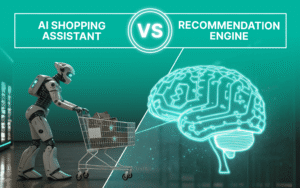
Best AI Product Recommendation Tools in 2026
| Platform | Best For | Key Strengths | Pricing Model |
|---|---|---|---|
| Dynamic Yield | Enterprise retailers | Advanced personalization, omnichannel consistency, extensive A/B testing, real-time decisioning across web, mobile, and email | Custom enterprise pricing |
| Nosto | Mid-market e-commerce | Easy implementation, visual merchandising tools, category page personalization, strong Shopify integration | Tiered based on revenue |
| Bloomreach | Content-heavy retailers | Combines product discovery with content personalization, powerful search integration, customer data platform capabilities | Custom enterprise pricing |
| Algolia Recommend | Tech-forward brands | Developer-friendly APIs, sub-50ms response times, seamless search-to-recommendation flow, excellent documentation | Usage-based pricing |
| Clerk.io | Small to mid-size businesses | Affordable pricing, quick setup, automated email recommendations, strong ROI for growing businesses | Starts at $99/month |
| Recombee | Custom implementations | Flexible API-first approach, supports various recommendation scenarios, transparent algorithm selection | Usage-based with free tier |
| Salesforce Einstein | Salesforce ecosystem users | Native Commerce Cloud integration, unified customer view across sales and service, predictive analytics | Included with Commerce Cloud |
Algorithm Comparison and Performance
| Algorithm Type | Accuracy | Implementation Complexity | Data Requirements |
|---|---|---|---|
| Collaborative Filtering | High for established users | Medium | Requires substantial user interaction data |
| Content-Based Filtering | Medium to high | Low to medium | Needs detailed product attributes |
| Deep Learning Models | Very high | High | Requires large datasets and computing resources |
| Hybrid Systems | Highest overall | High | Combines multiple data sources |
| Session-Based (RNN/Transformer) | High for immediate context | Very high | Sequential behavioral data |
Common Mistakes & Misconceptions
- Relying Solely on Purchase Data: Many businesses only use transaction history, ignoring valuable signals from browsing behavior, wishlist additions, and search queries. This creates a cold-start problem for new customers and misses 95% of visitor interactions that don’t result in immediate purchases.
- Ignoring the Cold-Start Problem: Failing to plan for new users and products without historical data leads to poor initial experiences. Effective systems use content-based filtering, trending items, and demographic data to provide relevant recommendations until sufficient behavioral data accumulates.
- Over-Personalization and Filter Bubbles: Showing only items similar to past purchases limits product discovery and creates echo chambers. Balanced systems incorporate serendipity and diversity metrics to expose customers to new categories while maintaining relevance.
- Neglecting Mobile Optimization: Recommendation widgets designed for desktop often perform poorly on mobile devices where screen space is limited. Mobile-first design with swipeable carousels and contextually appropriate placements is essential as mobile commerce exceeds 70% of traffic.
- Insufficient A/B Testing: Implementing recommendations without rigorous testing leads to suboptimal performance. Different algorithms, widget placements, and recommendation counts perform differently across segments, requiring systematic experimentation to identify optimal configurations.
- Privacy Compliance Afterthought: Collecting behavioral data without proper consent mechanisms and transparent privacy policies creates legal risks. GDPR, CCPA, and emerging regulations require explicit consent, data minimization, and user control over personalization.
Pro Tips & Advanced Insights
- Implement Contextual Bandits for Real-Time Optimization: Move beyond static A/B tests to multi-armed bandit algorithms that dynamically allocate traffic to better-performing recommendations while continuously exploring new strategies. This approach increases conversion rates by 12-25% compared to traditional testing methods.
- Leverage Negative Signals Strategically: Track and weight negative interactions like quick bounces, removed cart items, and “not interested” feedback. Incorporating these signals prevents recommending rejected products and improves model accuracy by 15-30% compared to positive-only training.
- Create Micro-Segments with Behavioral Clustering: Use unsupervised learning to identify behavioral customer segments beyond traditional demographics. Bargain hunters, trend followers, and quality seekers exhibit distinct patterns requiring different recommendation strategies for maximum effectiveness.
- Optimize for Business Metrics Beyond Clicks: While click-through rate is important, optimize for profit margin, inventory turnover, and customer lifetime value. Recommend high-margin complementary products and strategically promote overstocked items to balance customer satisfaction with business objectives.
- Build Explainability into Recommendations: Add transparent reasoning like “Customers who bought X also bought Y” or “Based on your interest in Z.” Explainable recommendations increase trust and click-through rates by 20-40% compared to unexplained suggestions.
- Implement Cross-Channel Consistency: Ensure AI Product Recommendation Engines share data across web, mobile app, email, and in-store experiences. Unified customer profiles enable seamless experiences where abandoned cart items appear in email recommendations and browsing history informs in-store associate suggestions.
Frequently Asked Questions
How accurate are AI product recommendation engines?
Modern AI Product Recommendation Engines achieve 60-85% prediction accuracy for established users with sufficient behavioral data. Accuracy varies based on catalog size, data quality, and algorithm sophistication. Hybrid systems combining collaborative filtering with deep learning typically outperform single-method approaches by 15-25%, while continuous learning from user feedback improves accuracy over time.
What data do recommendation engines need to function effectively?
Effective recommendation engines require user behavioral data (page views, clicks, purchases, time spent), product attributes (category, price, features, descriptions), and contextual information (device, location, time, session data). Minimum viable datasets include at least 1,000 users and 100 products with interaction histories, though performance improves significantly with larger datasets exceeding 10,000 users.
How long does it take to implement an AI recommendation engine?
Implementation timelines range from 2-4 weeks for SaaS solutions with pre-built integrations to 3-6 months for custom enterprise deployments. Cloud-based platforms like Nosto or Clerk.io can be operational within days for basic functionality, while sophisticated custom systems requiring data pipeline development, algorithm training, and extensive testing typically need 12-16 weeks before full deployment.
Can small businesses benefit from AI recommendation engines?
Small businesses with catalogs exceeding 50 products and monthly traffic above 5,000 visitors see measurable ROI from recommendation engines. Affordable platforms like Clerk.io and Recombee offer entry-level pricing starting at $99/month, delivering average conversion rate increases of 10-30%. The key is selecting solutions with quick implementation and minimal technical requirements that match business scale.
How do recommendation engines handle new products without purchase history?
Recommendation engines address the cold-start problem through content-based filtering using product attributes, trending algorithms that promote new arrivals, and transfer learning from similar existing products. Advanced systems analyze product descriptions and images with natural language processing and computer vision to immediately position new items within the recommendation framework, achieving 40-60% of mature product performance.
What’s the difference between rule-based and AI-powered recommendations?
Rule-based systems use fixed logic like “show products from the same category” and require manual updates, while AI-powered engines automatically learn patterns from data and adapt to changing behavior. AI systems deliver 2-5x higher conversion rates by identifying complex, non-obvious relationships that static rules miss, and continuously improve through machine learning without manual intervention.